
Traditional Knowledge and Native Biodiversity Help Communities Adapt to Drought in Bolivia's Dry Forest
- Ditlev Damhus

- 19. maj 2025
- 3 min læsning
Opdateret: 25. jun.
Revitalization of local knowledge and ecosystem-based adaptation strengthens resilience in drought-affected Bolivia

In eastern Bolivia, communities in the drought-hit Chiquitano region are turning back to traditional farming systems and ecosystem-based solutions to cope with increasingly severe climate pressures.
Through a partnership between local communities, FCBC (Fundación para la Conservación del Bosque Chiquitano) and Aktion Amazonas, families have strengthened food production, improved water security and increased their resilience to a changing climate.
Food systems under pressure: strengthening resilient small-scale agriculture
Faced with repeated crop failures and increasingly unpredictable rainfall, local farmers have been reviving native crops and agricultural practices that were once central to local food systems. Across eight Chiquitano communities involved in the project, nearly 100 hectares of traditional farming plots have been diversified, benefiting more than 300 families.
The shift has helped households maintain food production during prolonged dry periods while reducing dependence on vulnerable monocultures.
Together, these efforts have revitalized local food production systems and helped ensure that families continue to have access to food crops even during the most critical dry months.
Water scarcity driving community action
“Water scarcity has become one of the most pressing challenges in the Chiquitano dry forest. What communities are experiencing is no longer occasional shortages, but a structural decline in water availability during increasingly prolonged dry periods. Protecting natural water sources while investing in water storage infrastructure has therefore become essential,” says Huáscar Azurduy, Project Coordinator at FCBC.
In response, the initiative has helped more than 400 families gain access to improved water sources. Communities have also expanded their water storage capacity through the construction of nearly 3,000 m² of excavated reservoirs, enabling them to capture and retain water during the dry season and strengthen year-round water security.
At the same time, eleven natural water sources covering more than 3,000 hectares have been placed under community protection and integrated into local planning and municipal management frameworks.
Together, these measures are helping secure critical water resources while fostering stronger collaboration between communities and local authorities on watershed conservation and climate adaptation.

Native biodiversity creating new opportunities
Alongside improvements in small-scale agriculture (chacos) and water management, communities have been rediscovering the value of the biodiversity found in the forests surrounding their villages.
Women’s groups and producer associations have developed new income-generating activities through the harvesting and processing of native fruits such as Mangaba, Acerola, Conservilla and Mochochó. Once largely overlooked, these species are now creating economic opportunities while strengthening incentives for forest conservation.
By combining traditional knowledge with emerging market opportunities, families are building livelihoods that are both economically viable and environmentally sustainable. Surpluses from diversified farming plots and fruit processing have generated additional household income, further encouraging the continued use of climate-resilient practices.
As production expanded, strengthening market linkages became increasingly important. One example was a community fair that brought together 120 producers - 60 percent of them women - to showcase products, exchange experiences and connect with local markets.

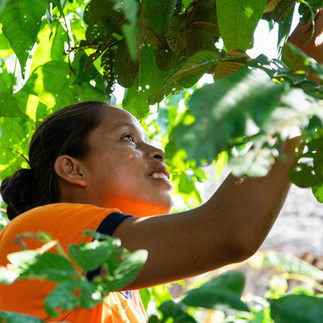


Often overlooked native fruits are becoming a source of income and resilience for communities in Bolivia’s Chiquitano dry forest, demonstrating how biodiversity can support both livelihoods and conservation. Photos (left to right): FCBC (two photos) and Maia Galmés Feuer. A broader transformation
“What we are seeing across the Chiquitano region is a gradual shift from coping with droughts to actively adapting to a changing climate,” says Huáscar Azurduy of FCBC. He adds:
“That transformation goes beyond agriculture. It includes better water management, stronger local governance and a renewed use of traditional ecological knowledge.”
Part of this transition has involved strengthening community institutions and local ownership of adaptation efforts. Communities have developed their own statutes and regulations, improving access to public resources and institutional support, while traditional governance structures and local cabildos have taken on a stronger role in planning and implementing adaptation measures.
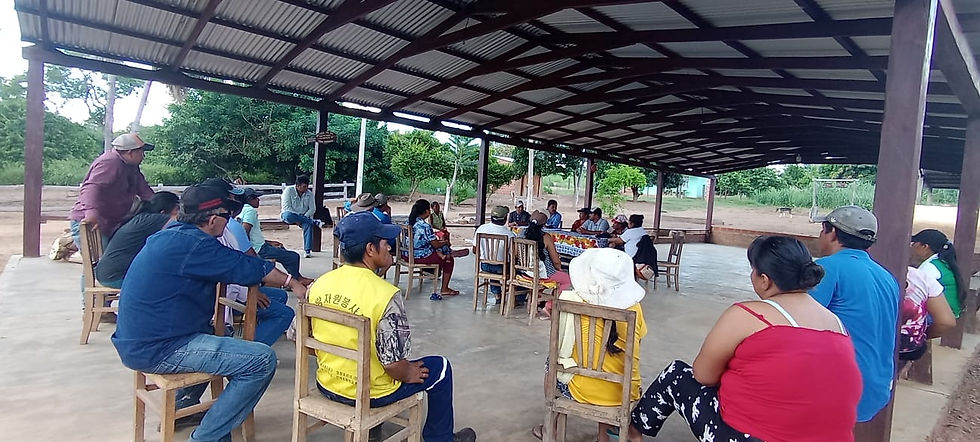
The project has also strengthened collaboration between communities and public authorities. A regional water management summit brought together community leaders, municipal governments and departmental authorities, while local adaptation priorities have increasingly been reflected in community and municipal development plans.
As droughts become longer and rainfall patterns more unpredictable, communities across the Chiquitano dry forest are showing that climate adaptation is not only about new technologies or infrastructure. It is also about recovering knowledge, strengthening local institutions and unlocking the value of native biodiversity.
By combining traditional farming practices, water stewardship and sustainable forest-based livelihoods, communities across the Chiquitano dry forest are demonstrating that some of the most effective climate solutions can emerge from local knowledge, biodiversity and collective action.

Kommentarer